


Emily Brontë’s 1847 novel is iconic, inspiring over 40 adaptations across film, TV, opera, and musical theatre.
Of 17 international film adaptations listed on Wikipedia and IMDb, 15 had male directors. Of 7 English-language versions, only one cast a non-white Heathcliff, with James Howson becoming the first Black actor to play the famous character in 2011 after winning an open casting call.
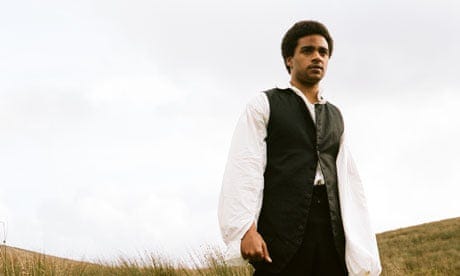
Criticism for this adaptation centres on Jacob Elordi’s casting. In the novel, Heathcliff is described as “dark-skinned,” implying Black or Brown heritage and sparking debate over his origins.
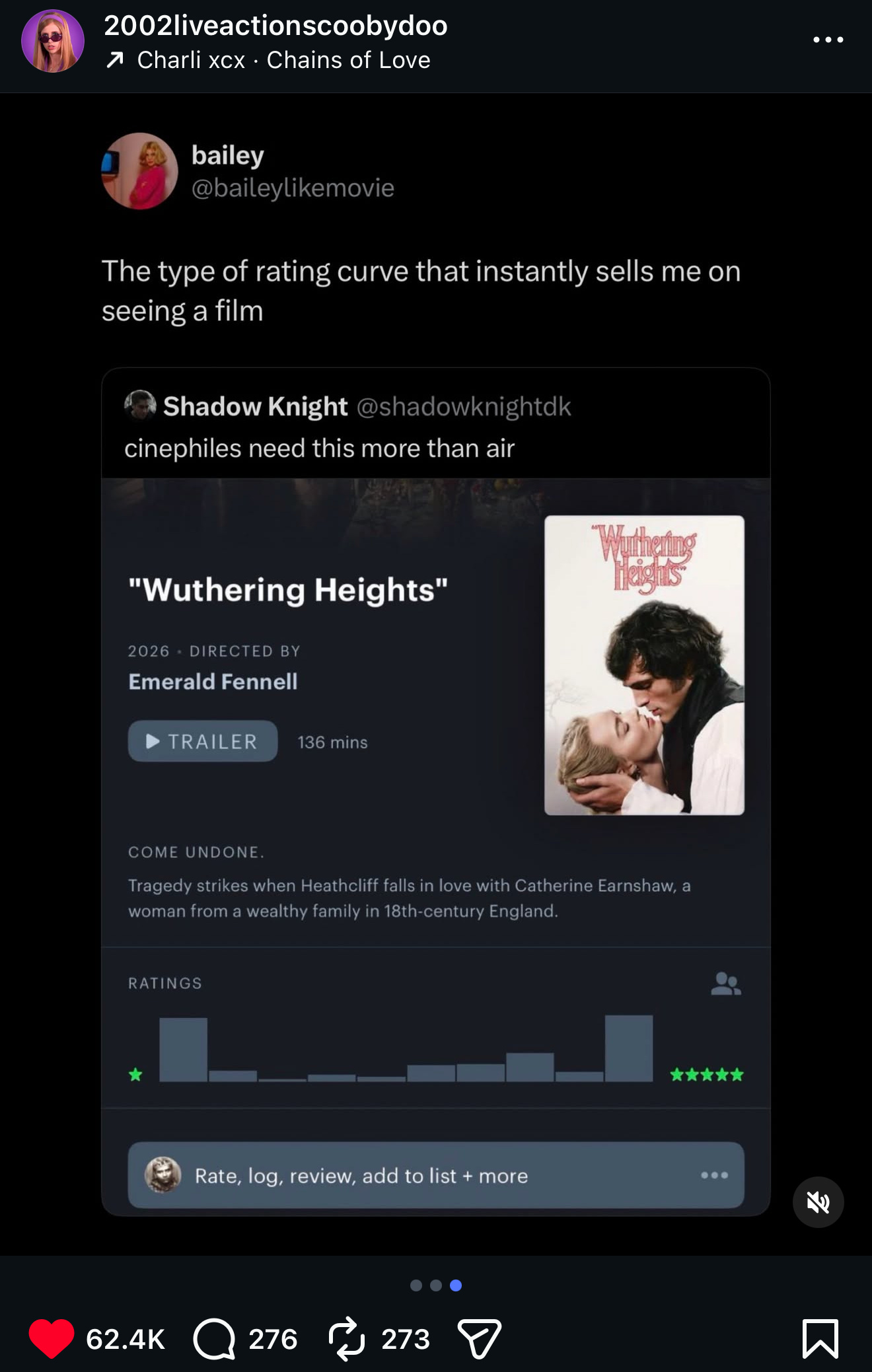
Six out of seven English adaptations cast Heathcliff as white, disregarding his racial ambiguity in the source material. Elordi, who is also white, drew rapid social media backlash, dominating online discussion. Few positive social media reviews remain untouched by hate comments targeting ‘whitewashing’ or ‘unfaithful’ casting. Initial polarising 1- and 5-star Letterboxd reviews soon averaged out to three stars.
Knowing this context, I approached this film without prior exposure to the book or its 40+ adaptations.
To describe the movie using other titles you may have seen, imagine blending the world and setting of Bridgerton (2020-), the love story of Materialists (2025), the steaminess of Fifty Shades (2015), and the dark tone of Les Mis (2012)—the result is Wuthering Heights (2026).
Speaking of creative influences, the film is directed by Emerald Fennel. It is her third feature, following Promising Young Woman (2020) and Saltburn (2023), and marks her third collaboration with Margot Robbie’s LuckyChap Entertainment and second with Jacob Elordi.
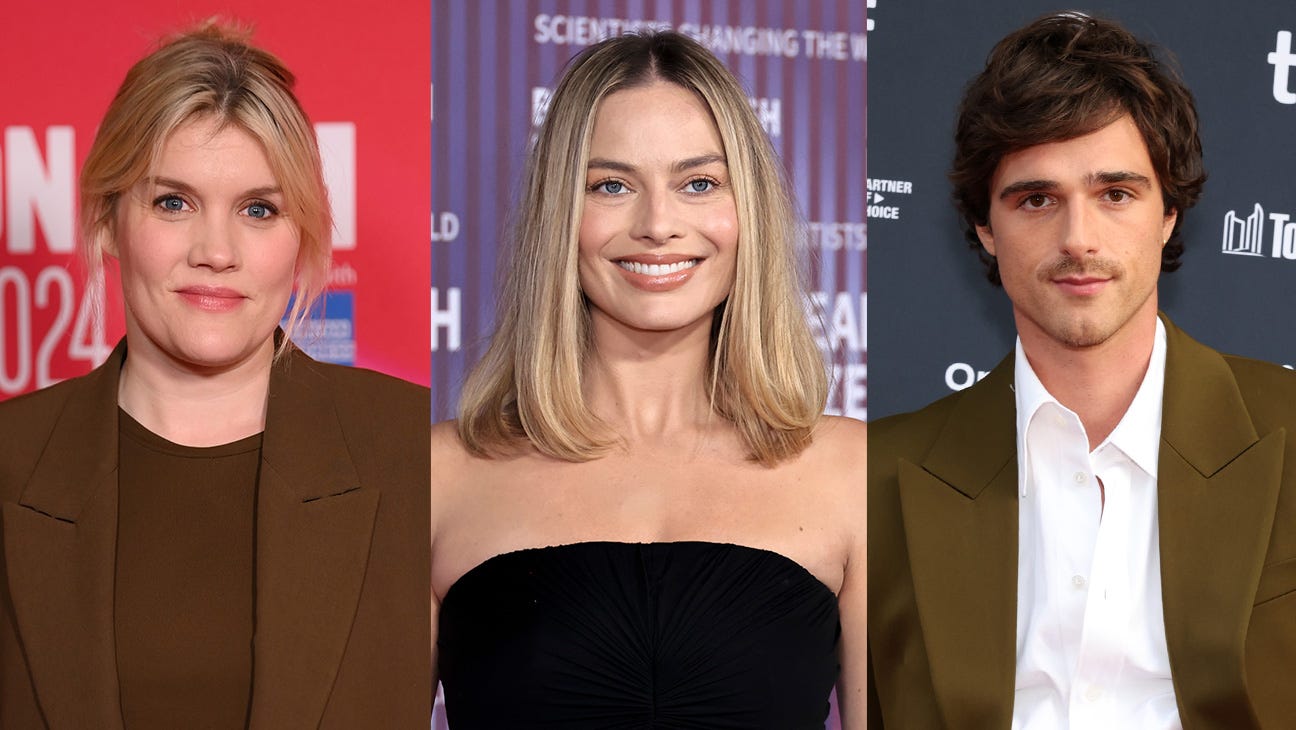
With Fennell, Robbie, and Elordi attached, a bidding war erupted in October 2024. Netflix offered $150M, but LuckyChap’s first-look deal with Warner Bros. secured the project for $80M, guaranteeing theatrical release and a major marketing campaign.
I would rate the film 3/5, plus an extra star for making me cry. The costume and production design were impressive, and the orchestral score was memorable; I’ve had it on repeat all weekend. The film held my attention from start to finish; I found myself gripping every word and on the edge of my seat.
Four days after release, the film has dominated the global box office, recouping its $80M budget and becoming the most financially successful adaptation by far.
After learning more about the source material, I understand why book fans aren’t satisfied with the adaptation. On paper, the actor who plays Nate Jacobs—a hot, cruel, abusive character—makes the perfect Gen Z Heathcliff. But while the book is dark, multi-generational, and horrific, the movie is sugary sweet and loses much of that darkness.
Reflecting on this, I think the discrepancy in reviews arises because some people, myself included, view the film as an excellent standalone romantic tragedy, while others see it as an adaptation and judge it as lacking or deviating from the themes and qualities of a good, iconic, classic book.